QualityLink worked to create a seamless and interoperable environment for sharing quality data across European higher education by developing a pilot platform that aggregates relevant quality information, improving the decision-making process for all stakeholders and fostering a more flexible, learner-centric educational landscape.
QualityLink published an open set of technical specifications for sharing quality data on higher education courses and micro-credentials across Europe. They define how institutions can publish course data, how that data can be discovered and aggregated, and what format it should take.
QualityLink developed a shared European infrastructure for publishing and aggregating course data. In plain terms: your institution publishes its course information in an open, standard format, and it automatically feeds into a Europe-wide catalogue that anyone can search.
Think of it as making your courses findable — across borders, across systems, without extra costs or proprietary platforms.
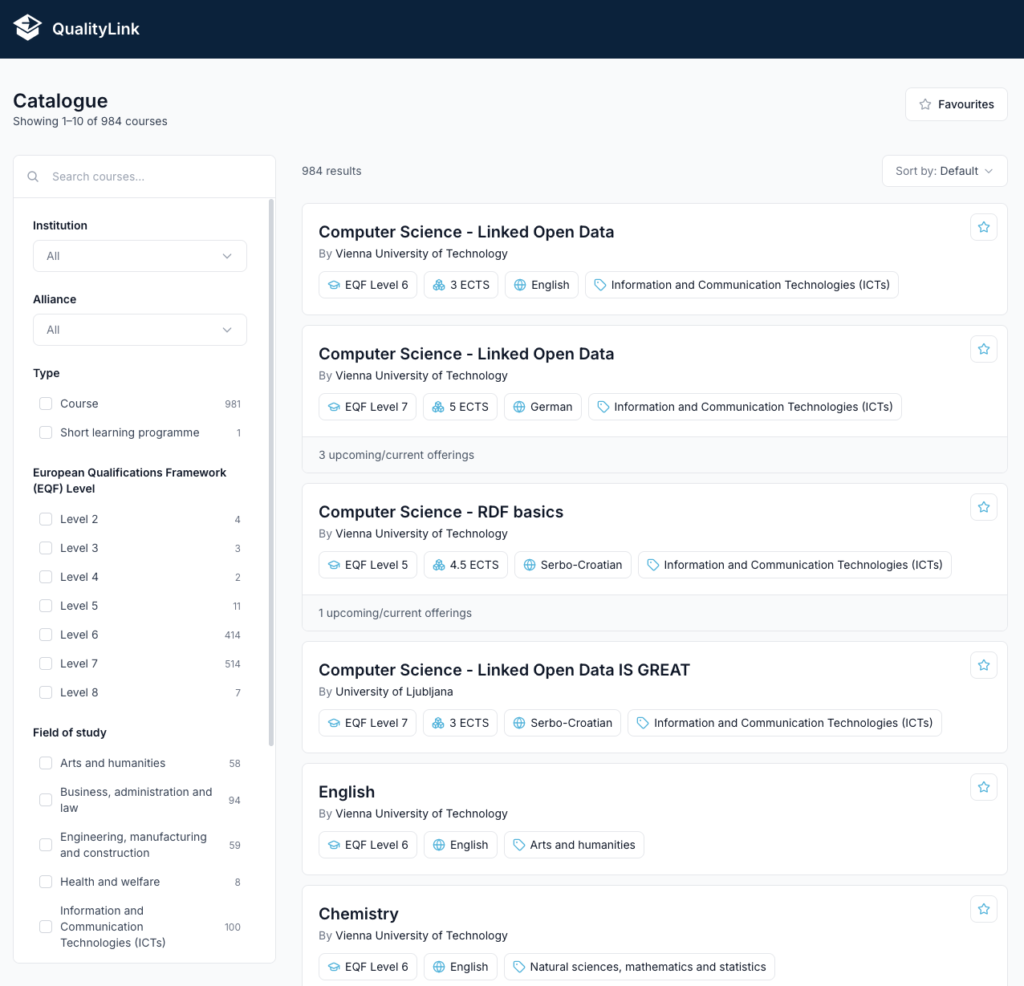
The QualityLink course catalogue brings together learning opportunities from all participating institutions in one searchable place. Students, employers, and recognition officers across Europe can discover what’s on offer.
The QualityLink project team identified 28 quality indicators for micro-credentials, grouped into 5 thematic domains. Students and other stakeholders in education validated and ranked the domains and indicators by relevance.
The QualityLink project aims at creating a technical architecture for aggregating basic course data and quality indicators from various trusted data sources, including the ability to match data from different sources on the same micro-credential, course.